Innovating Endoscopy: Interview with J. Andrzejowski
In modern operating rooms where speed, precision and patient safety intersect, technology is no longer just a tool, it is a decision maker. We spent time with clinical specialist John Andrzejowski, whose daily work with bronchoscopes places him at the centre of high-risk, fast-paced interventions, to discuss how single-use endoscopes are reshaping workflows, infection control and patient outcomes.
John opens with a raw look into his world: urgent cases, rapidly changing conditions, teams working as one organism. Bronchoscopy is often the difference between hesitation and action. “No two days are the same,” he says. “Some procedures are straightforward, others require fast thinking and equipment you can rely on without hesitation.” In the OR, clarity and reliability are not luxuries, they are life-critical.
Sterility, Speed, Availability: Why Single-Use Is Changing the Standard
When we ask John how single-use bronchoscopes have impacted care, his answer is immediate: performance without delay. No waiting for reprocessing. No uncertainty around contamination. No compromise in emergencies.
“Speed, safety and availability, those three things change everything. When a device is ready instantly, you avoid bottlenecks and reduce risk.”
This shift aligns with hospital priorities today, reducing infection transmission, increasing case turnover efficiency and ensuring consistent device quality.
The Features That Matter Most: Suction and Visibility
We then turned the discussion to performance. What matters most in the moment where a clinician must act?
John highlights two non-negotiables:
- Strong, reliable suction for clearing airways quickly
- Excellent visualization for clear decision-making
If a bronchoscope helps clinicians see better and clear secretions faster, patient safety improves — especially in critical airway scenarios. Reliability is the benchmark. Simple. Immediate. Responsive.
Beyond Endoscopy
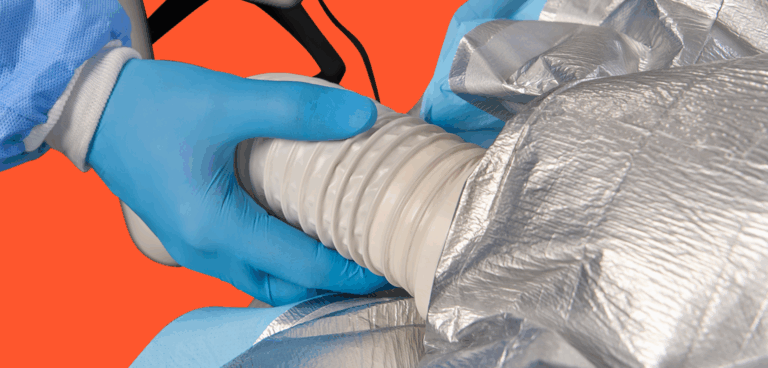
Endoscopy is not the only field evolving. John also reflects on a topic that deserves more attention: patient warming and perioperative temperature management. Hypothermia during surgery increases complications, affects recovery, and adds preventable risk.
“Devices like patient warmers are no longer ‘nice to have’. They’re essential for safety, comfort and recovery time.” Maintaining normothermia reduces complications, improves healing and enhances the overall surgical journey. This is healthcare quality measured where it matters most, in outcomes.
Where the Future of Endoscopy Is Headed
As we discuss what comes next, John’s perspective is clear:
“Smarter tools that make clinicians think less and act more.”
The future is high-performance single-use scopes, real-time responsiveness, improved suction and visualization, and smarter systems that remove friction from workflow. With global focus shifting toward infection control and efficiency, disposable technology is not only relevant, it’s inevitable.
Hospitals are accelerating adoption. Workflows are tightening. Expectations are rising.
And endoscopy is entering a new era.